We have all met someone (or perhaps we are someone) who seems to have it entirely together. From the outside, they radiate assurance. They speak with conviction, navigate social rooms with ease, and command respect in their professional lives.
Yet behind closed doors, a single piece of negative feedback or a minor setback can cause their entire internal world to crumble.
If you have ever felt like an imposter while looking like a leader, you aren’t alone. It is entirely possible to look confident on the surface while feeling completely unsteady underneath. To understand why this happens and how to fix it, we have to look at the fundamental difference between confidence and self-esteem.
The Illusion of the Beautiful Tree
To understand this dynamic, imagine two trees standing in a field.
- The First Tree: This tree is massive, beautiful, and impressive. Its canopy is lush, and it immediately draws the eye of anyone passing by.
- The Second Tree: This tree is slightly smaller, perhaps less flashy, and doesn’t immediately command the same attention.
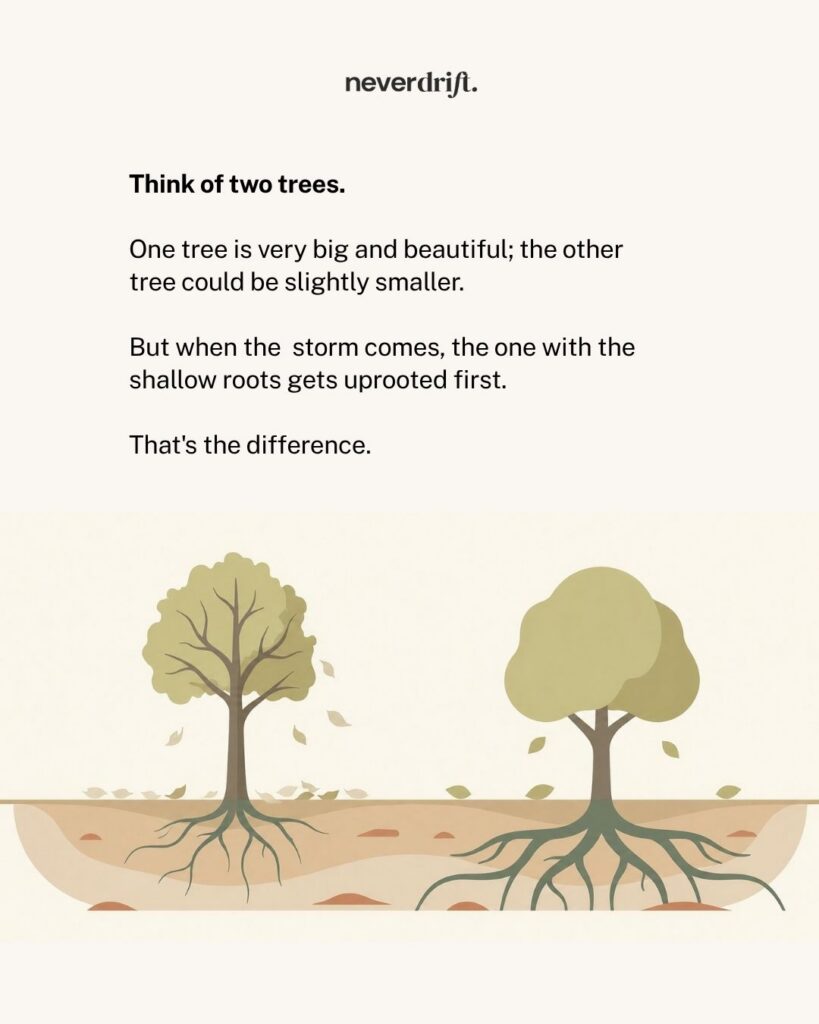
To the casual observer, the first tree looks vastly superior. But look below the surface. The large, beautiful tree has incredibly shallow roots. The smaller tree has roots that delve deep into the bedrock.
When a violent storm hits, the beautiful tree with the shallow roots is the first to be uprooted. The smaller, deeply rooted tree might lose a few leaves, but it remains standing.
A lot of high-performers are exactly like that first tree. They are highly confident and deeply impressive to the outside world.
However, when an unexpected storm hits (whether it’s a critical performance review, a failed project, or an interpersonal conflict), they feel completely uprooted. They find themselves surprised by just how deeply and intensely a single setback can affect them.
Confidence vs. Self-Esteem: What’s the Difference?
The reason this disproportionate emotional reaction happens is that we frequently confuse confidence with self-esteem. While they sound like the same thing, they serve entirely different psychological functions.
As the psychologist Nathaniel Branden famously wrote:
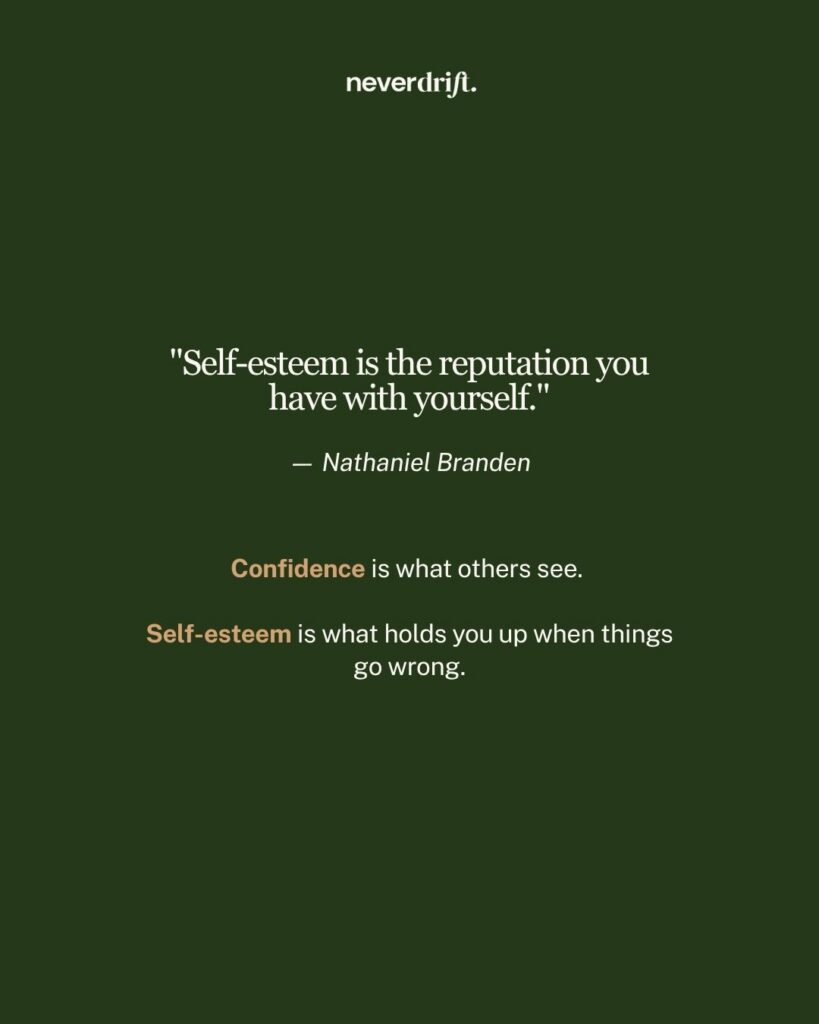
“Self-esteem is the reputation you have with yourself.”
When we break down the two concepts, the distinction becomes clear:
| Concept | What It Represents | The Core Function |
| Confidence | What others see. | It is built on external validation, skills, presentation, and past successes. |
| Self-Esteem | What holds you up when things go wrong. | It is your internal baseline of worth, entirely independent of external achievements. |
Logically, when a minor failure occurs, a high-performer should be able to look at their long track record of success and realize they are fine.
But human beings don’t respond to triggers logically; we respond at an emotional level.
If your external confidence is a giant canopy but your internal self-esteem is a shallow root system, any threat to your success feels like a threat to your very survival.
The Good News: You Can Grow Your Roots
If you realize that your internal roots are shallower than your external achievements, you aren’t stuck that way. Psychological roots can grow.
Through the science of neuroplasticity, we know that the brain is not hardwired. We can literally rewire how we respond to stress and criticism over time.
Building self-esteem is very much like building physical fitness: it requires consistent, intentional mental workouts to build your “mental muscles.”
Shifting your focus from outward confidence to inward self-esteem isn’t about becoming completely numb or unaffected by life’s storms.
No one is entirely bulletproof, and it is natural to feel stung by failure. Instead, the real work is about building a foundation so solid that you can remain firmly rooted through them, knowing that your worth as a person is entirely safe, no matter which way the wind blows.
🍀If something in this post made you pause, that’s usually worth looking at. Learn more about working with Natalie here.