
Something I notice quite consistently in high-achieving women is that the over-responsibility doesn’t start as a relationship problem. It starts much earlier, and by the time it surfaces in the relationship, it’s already been running quietly for a long time.
They become the one who tracks everything, who remembers, anticipates, and manages. The emotional load of the household or the partnership gets absorbed. At some point they look up and realise they haven’t felt like a partner in a while. They’ve felt like the person responsible for making everything work.
The sentence that eventually surfaces is some version of: I don’t want to mother you. I want a partner.
What’s interesting is that this doesn’t come out the same way across every woman. The over-responsibility is consistent. The delivery differs.
Some women reach a breaking point – one moment where everything that’s been accumulating finally finds an exit. It can look disproportionate to whatever triggered it. It rarely is. The trigger is just the moment the container got too full.
Other women never quite break. They stay in it, circulating the same frustration in quieter ways, the dynamic becoming more entrenched each time the same loop repeats itself.
Both are worth paying attention to.
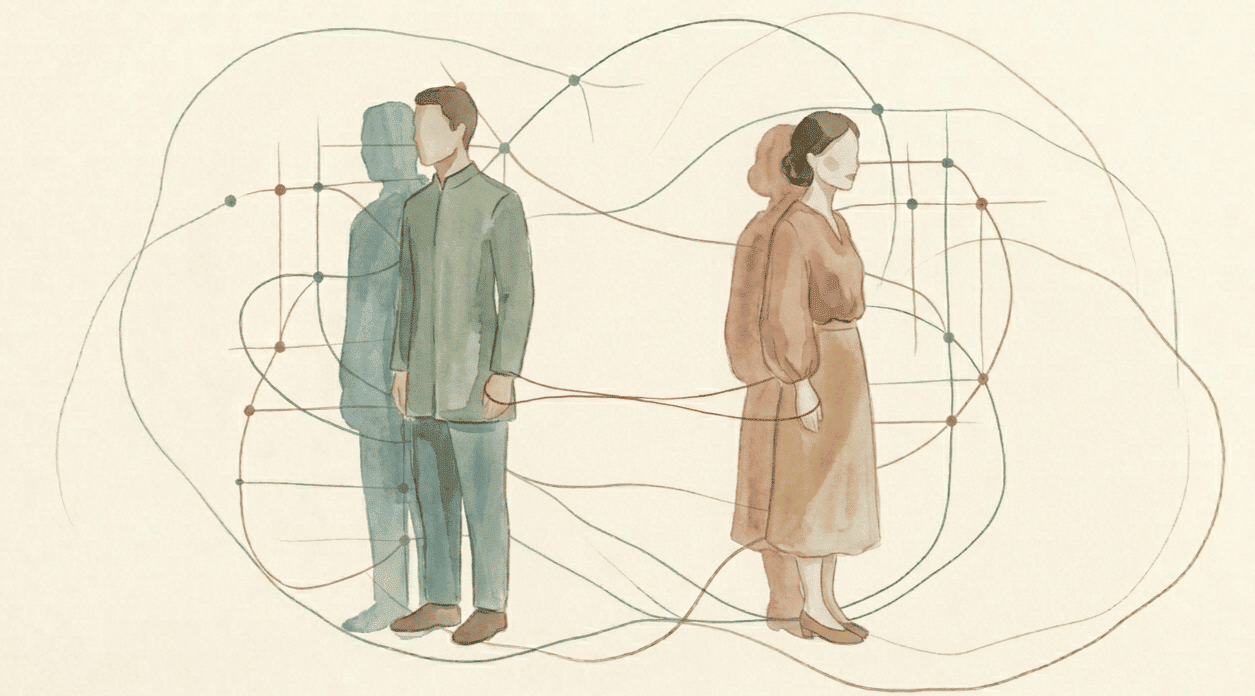
What I keep coming back to, working with clients on this, is that the relationship dynamic is downstream of something more fundamental: the question of who they intended to be in this relationship, and when they quietly stopped being that person.
Not in a self-blaming way, but more as a reflection: Did I choose this role, or did I just become good at it and keep going?
That’s an identity question.
When it goes unanswered long enough, it tends to move.
- The resentment that builds is Emotional Drift.
- The nagging or the sharp delivery is Behavioural Drift.
- The growing distance, the feeling of being in the same space but not quite in the same relationship anymore, is Relationship Drift.
None of these are inevitable. They’re just what happens when the identity question stays unanswered long enough.
What I find is that most women working through this already sense something is off. Call it women’s intuition if you will – they’re not unaware.
Usually they’ve been managing around it, trying different approaches, having variations of the same conversation. What tends to shift things is stepping back from the dynamic itself and asking a more foundational question: who did I intend to be here, and what’s the gap between that and what I’m actually doing?
That question doesn’t resolve the relationship overnight. But it moves the work somewhere more useful than another circuit of the same conversation.
“Here goes another fight. Whatever I do, it’s never enough.”
That’s what the same dynamic often sounds like from the other side. We will explore this POV in a different post – stay tuned!


Be The First To Comment