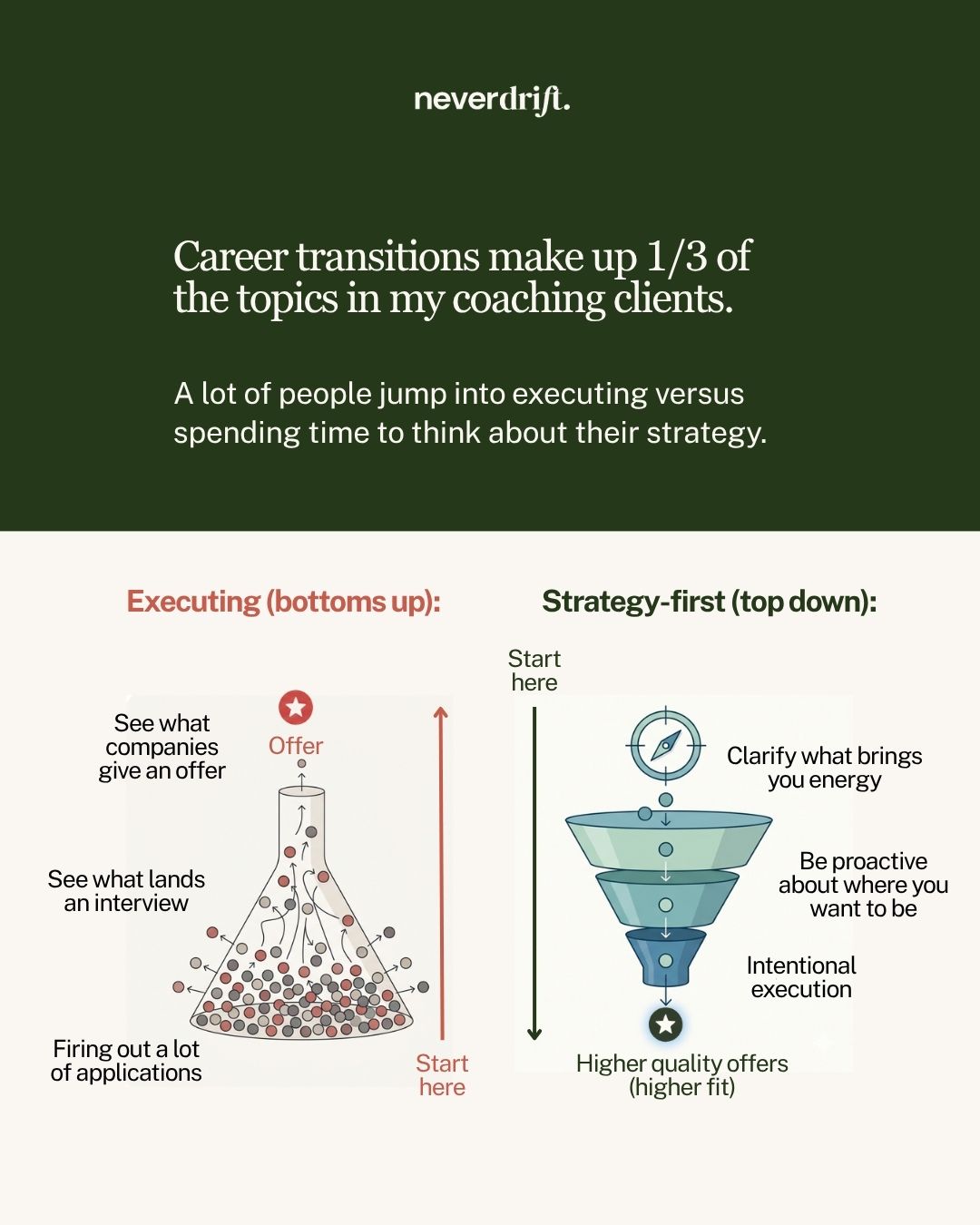
Most people approach their career by executing first – sending out more applications, to get more interviews.
I call that a bottoms-up approach and it’s understandable. It feels productive as there’s more motion.
But real clarity rarely comes from activity alone. Motion does not mean progress.
Before deciding what to pursue, I think it’s worth slowing down to understand a few deeper things – for example:
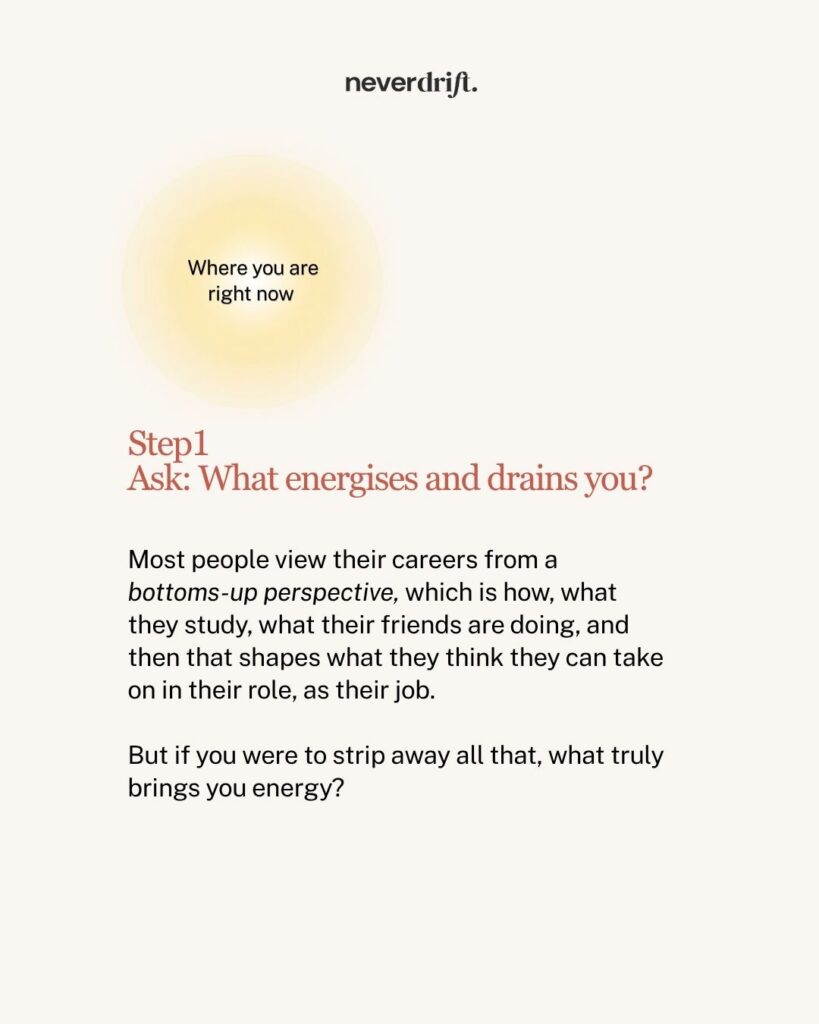
1. What actually energises you and drains you
- Most people view their careers from a bottoms-up perspective, which is how, what they study, what their friends are doing, and then that shapes what they think they can take on in their role, as their job.
- But if you were to strip away all that, what truly brings you energy?
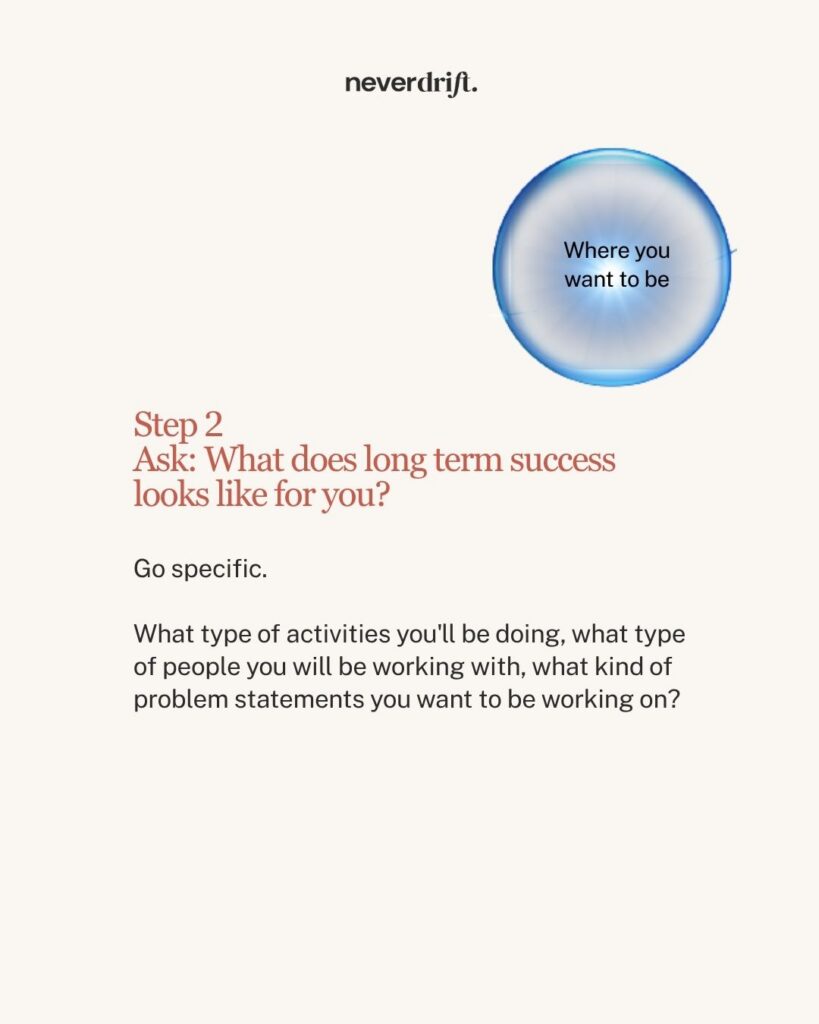
2. What long-term success looks like on your terms
- Go specific. What type of activities you’ll be doing, what type of people you will be working with, what kind of problem statements you want to be working on?
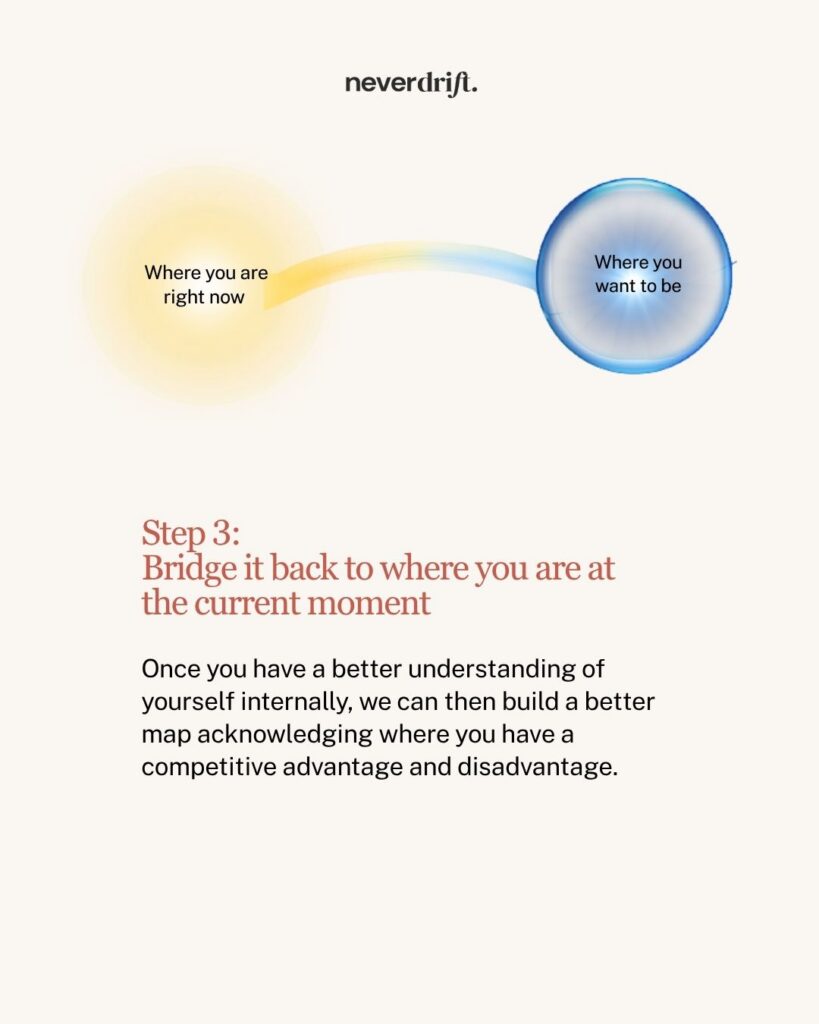
3. Bridge it back to where you are at the current moment
- Once you have a better understanding of yourself internally, we can then build a better map acknowledging where you have a competitive advantage and disadvantage.
I call this the tops-down approach and I applied this thinking to my own career.
Looking back, I went into consulting because it was familiar and tbh, felt “rewarded” and “validating” in the circles I was in.
I could do the work and enjoyed parts of it, but over time I had to admit it wasn’t where my strengths or energy were best used. Staying simply because I’d already invested so much would have been a sunk-cost decision, not a strategic one.
Clarity doesn’t come from doing more. It comes from thinking better about why you’re doing it.
If you’re thinking about career transitions, recognising where you are and understanding yourself internally will help you move strategically.
This point of acceptance actually helped set me up for other successes and moves in my career journey, because I was then free and had space to take on things that align more naturally with my strengths.
In the long run, when you take on roles that naturally align with you, performance would also naturally be better.
If something in this post made you pause, that’s usually worth looking at. Learn more about working with Natalie here.