Last month, we explored how becoming a mum changes you. (Read our Motherhood series here) This Father’s Day weekend, we wanted to do the same for dads, because this shift shows up for them too – just in its own way.
There’s a version of fatherhood that doesn’t get talked about much. It’s not the sleepless nights or the diaper changes. It’s the decision so many fathers make without realising they’re making it: I am solely responsible for another life. I have to hold this together alone.
That’s exactly what Dave told me when we started working together:
1. Who you are: Before the roles and the responsibilities, how would you describe yourself as a person? What matters to you, what drives you, and what did you think your life would look like?
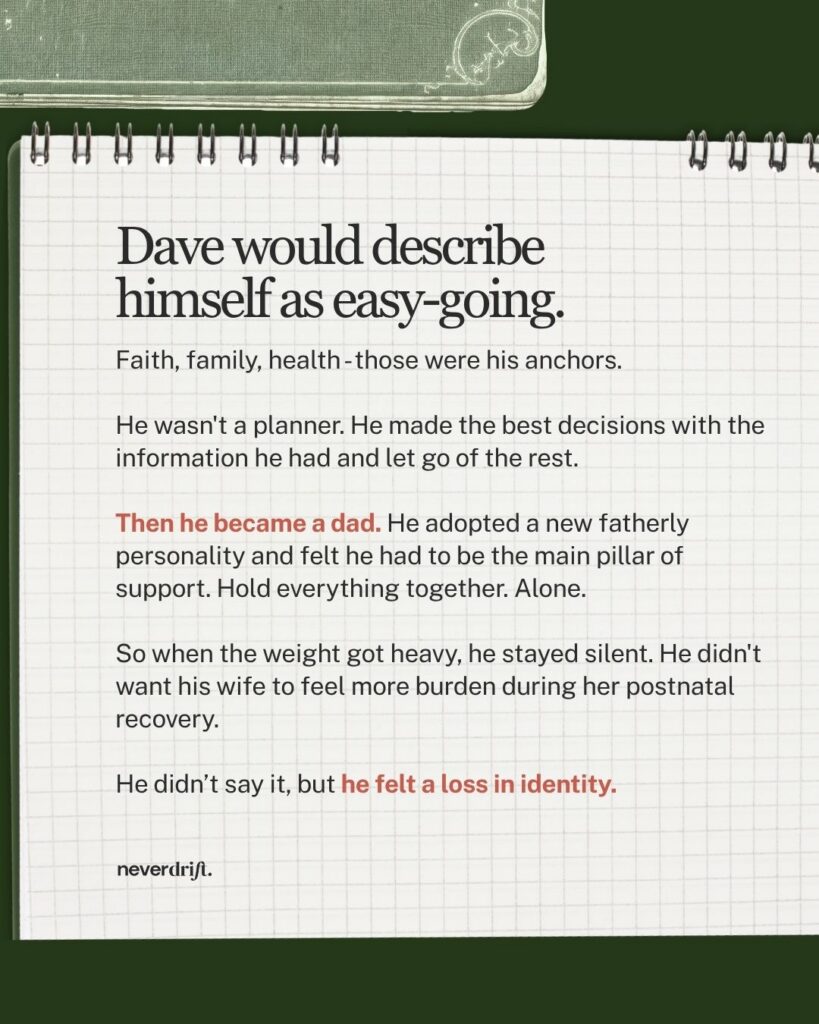
D: As a person, I would say I’m pretty easy going. I wouldn’t be planning how my life would look like in the next 5 or 10 years. I feel like I am winging it most times. I firmly believe in controlling what I can and “yolo-ing” for the rest of it. You just don’t get all the answers always, you make the best decisions with whatever information you have. What matters to me – Religion matters, family matters, health and wellness matters.
What drives me – Passion drives me. If I have no interest in something, I find it very challenging to do perform any task associated with it. For example, I like tech and would want to learn more about it.
What did I think my life will look like? I used to think I would continue my dad’s import/export business. But he didn’t want me to continue in it. He has never brought it up with my sister and I.
And when you became a dad, was there anything that shifted in how you saw yourself, or in what you expected of yourself? Anything you’d call out from that moment?
D: I saw myself having to adopt a new fatherly personality. I thought “Now, I am solely responsible for another life.” This thinking however was wrong. It gave myself too much pressure. Raising a baby really takes a village. There is just too much for 1 person to handle everything.
2. When something started to feel off: In the middle of all the roles and responsibilities, was there a point where you realised you weren’t sure when you’d last asked what you actually needed? Was there a moment where you decided you didn’t want to keep operating the way you were and if so, what showed up in that moment?
D: There was definitely a loss in identity. I lost a large part of my social life.I felt tied down to my family. I wanted to go back to my previous routine where weekends are freed. I wanted to sleep in. I wanted to exercise whenever I want. Those things were gone. There was a sense of regret and a tinge of shame. Shame because I felt I wanted to abandon my family life.
3. What you didn’t say out loud: What were you thinking or feeling that you didn’t really share with others? Did any of those thoughts feel difficult to admit especially given the expectation to hold things together and keep going?
D: Yes, I definitely felt like i needed to hold it together. I am still a bit traditional. I felt I was the main pillar of support and I should be able to hold everything together, alone.
And I also wanted my wife to have an easy post natal so that meant keeping silent and not letting her feel more burden.
Nat’s commentary: This is how Identity Drift usually looks like – it builds up slowly over time, as values like growth, freedom, and connection getting squeezed out by an identity that had narrowed down to “the one who holds it together.” It may look like strength, but it is actually a man slowly losing access to the parts of himself he needed most.
4. What prompted you to seek support? Before you started paying closer attention to yourself, did you try other things first? Push through, tell yourself it was just a season, keep going? What made you decide that a different kind of work was needed, and what brought you to Neverdrift?
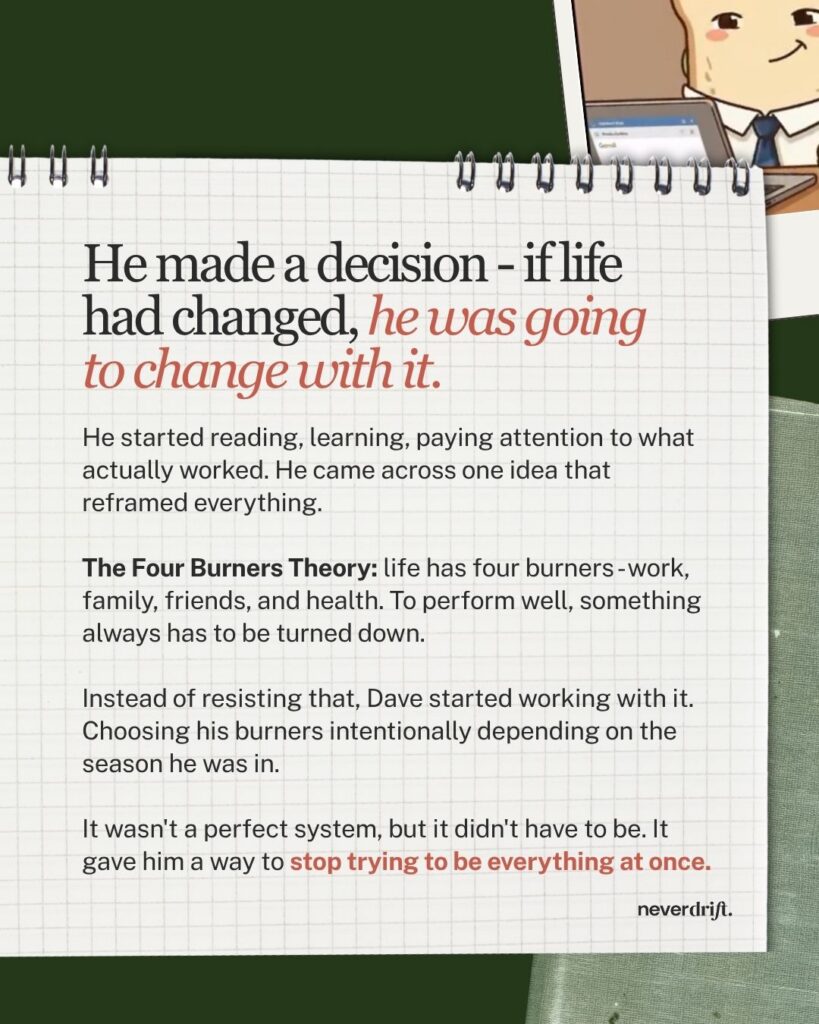
D: What was very real for me was that life is not going to be the same again. There is no u-turn or redo. I have just to have forge forward and get the best with what i have.
You can say ‘when life give you lemons, make lemonade’. I started reading more productivity and self-help books. What I found more interesting is this chart going around on instagram and that introduces the 4-burner concept. https://jamesclear.com/four-burners-theory
The Four Burners Theory says that “in order to be successful you have to cut off one of your burners. And in order to be really successful you have to cut off two.”
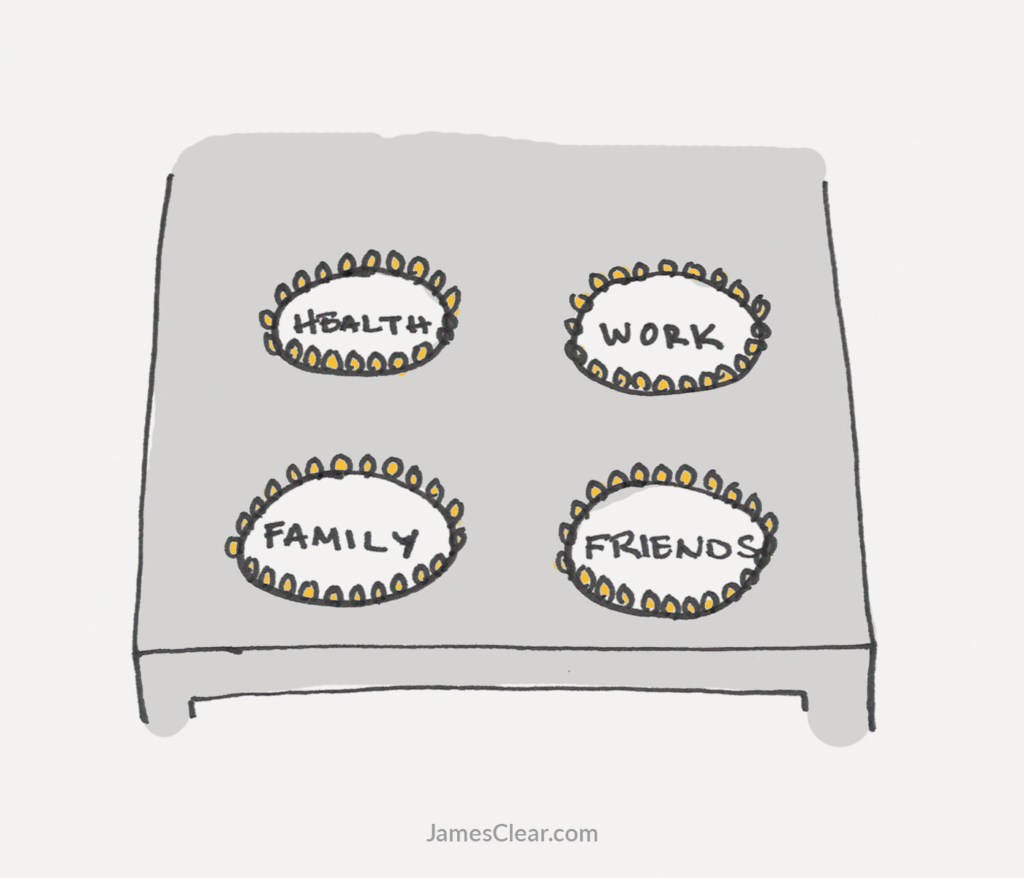
I started practicising this. It hasn’t been a perfect execution and it doesnt have to be. I switch these around often. At 1 point, I would be focusing on health and work i.e. neglect family and friends. And other times i could be focusing on family and work. It really depends on the season you are in.
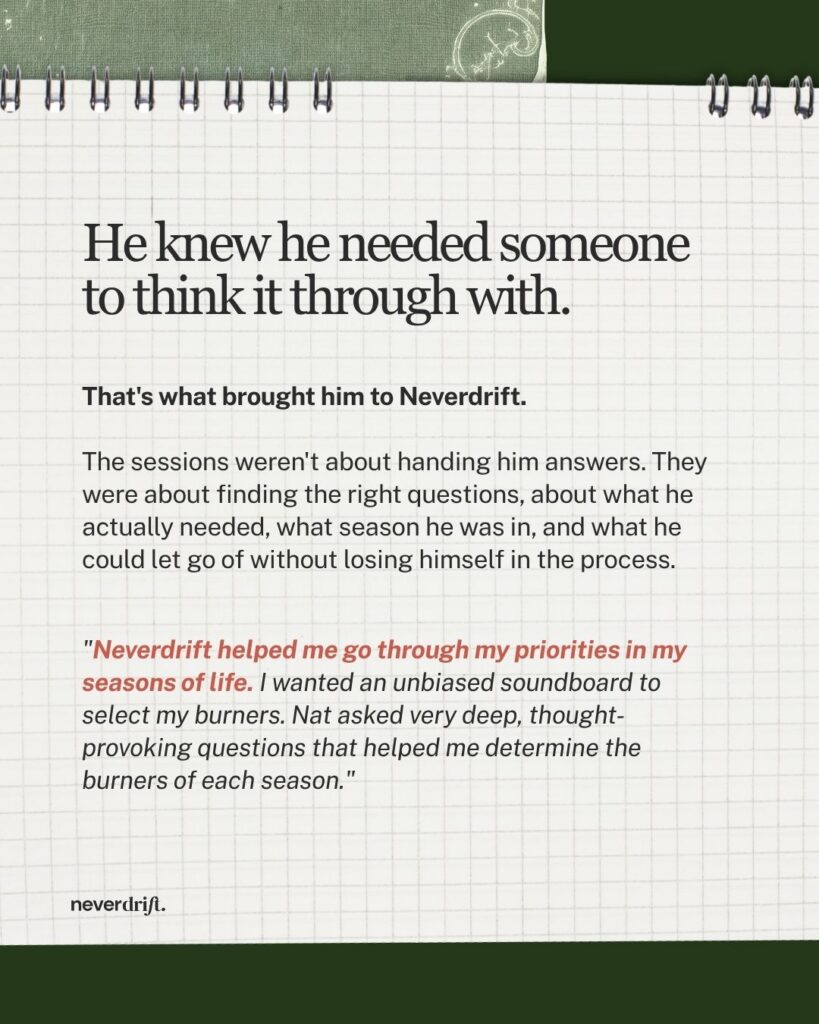
Neverdrift helped me to go through priorities in my seasons of life. I wanted an unbias soundboard to select my burners. Nat asked very deep, thought-provoking questions that helped me to determine the burners of the seasons.
5. The inner work and what it changed: When you started working with Neverdrift, what were you hoping to get out of it and what actually shifted? Did it change how you showed up as a father, a partner, or a leader and what did that look like in practice?
D: I was hoping to get answers directly or perhaps instructions. But I guess I would just keep drifting around answers that are not from my inner self. What has changed within is that I got a better understanding of what I want for my family, friends, work and health.
I learned that I don’t always have to be present as a parent. I can trust my other half to be present too. And for work, it’s really a means to an end. And one day it will stop serving me. I learn that by prioritising myself, I am actually working to the benefits of others too.
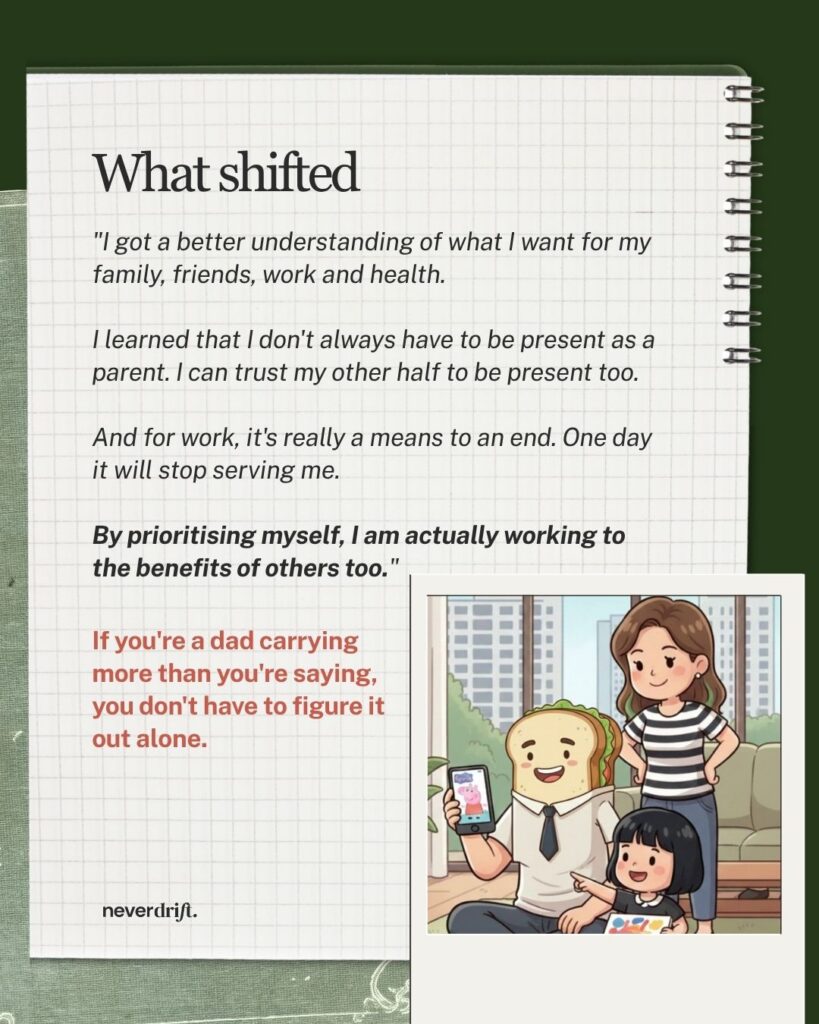
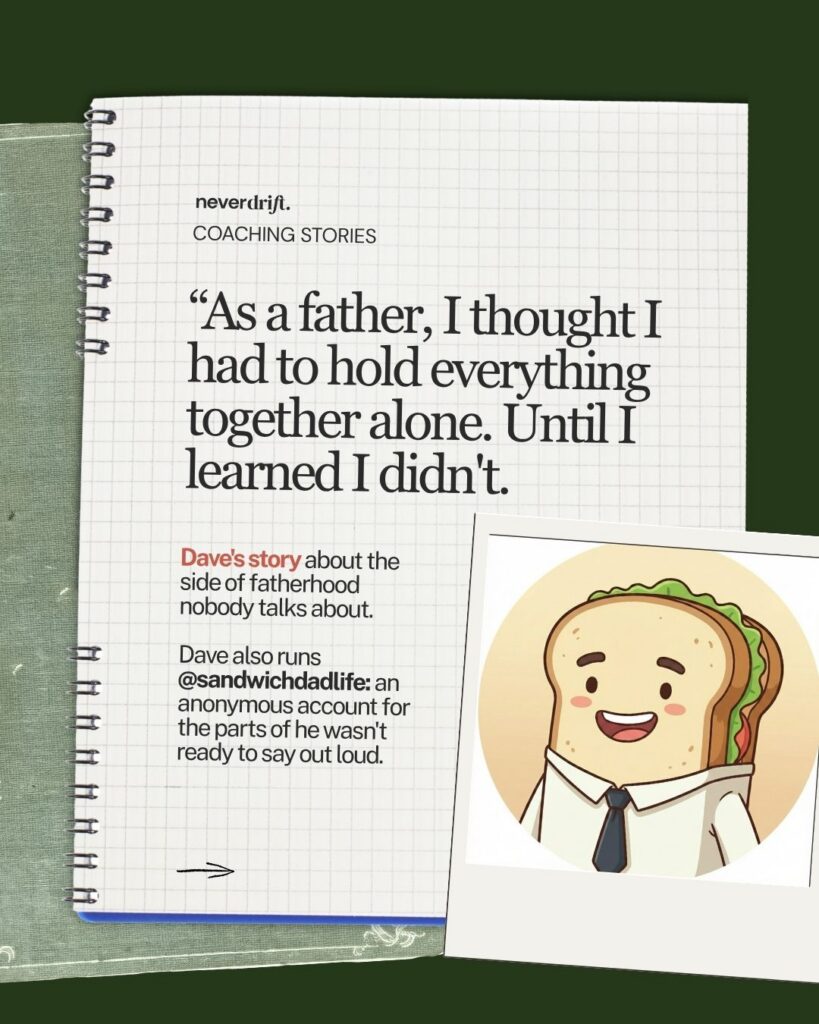
After working together, Dave realised the different parts of who he was were all valid and deserved a place to be expressed.
That’s what led him to create an anonymous Instagram account, @sandwichdadlife, where he could share the things he hadn’t felt comfortable sharing with the people who knew him.
If you’re a father reading this and some part of it sounds familiar – the silence, the pillar, the belief that asking for support is somehow a failure of duty, I’d say what I told Dave. You don’t have to hold it together alone.
🍀If something in this post made you pause, that’s usually worth looking at. Learn more about working with Natalie here.