For a long time, I thought answering everything within minutes was the definition of high performance.
If a client or colleague reached out, I dropped what I was doing and wrote a detailed reply. Speed felt like reliability.
It took me ten years to realize that my fast replies were actually costing me:
- My deep focus was constantly fragmented.
- My energy was drained by 3:00 PM from reacting all day.
- My answers were fast, but rarely as thoughtful as they could have been.
What happened when I stopped
When I finally stopped responding immediately to non-urgent requests, my work quality improved tremendously.
Giving myself space to digest information didn’t make me less effective – in fact, it made the quality of my thinking infinitely higher.
This is one of the first things I address with the high-functioning leaders I coach.
They come to me burnt out, convinced they need more hours in the day.
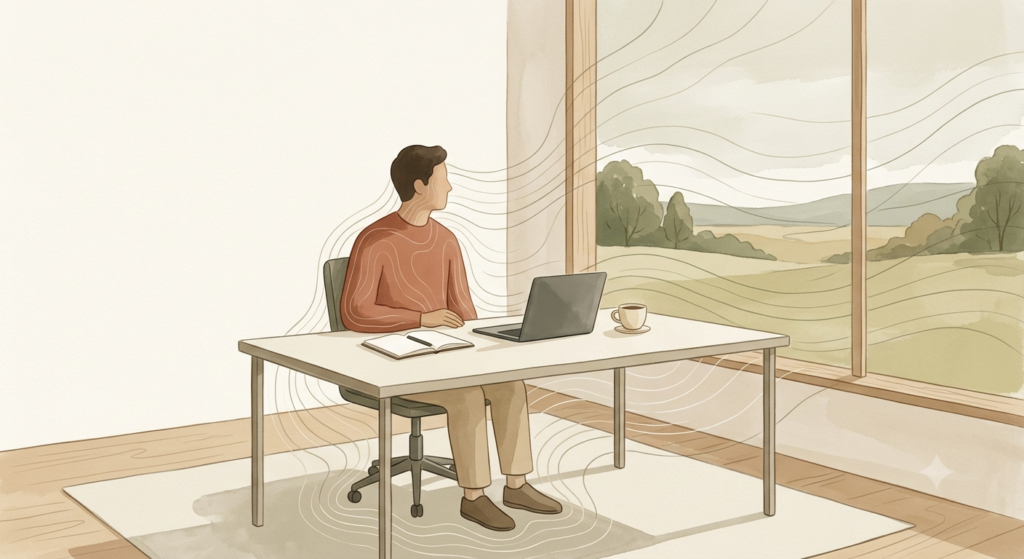
What they actually need is the ability to tolerate an open loop.
An open loop is any unclosed message, pending decision, or half-finished thought. For most people, it’s just a task.
But if your identity is tied to being “the reliable one,” an open loop can actually feel like a threat.
When you’re conditioned to be the bottleneck-solver, an unclosed loop triggers a state of internal micro-anxiety.
When you lack the ability to tolerate an open loop, you reply immediately (Behavioral Drift) – not because the work requires it, but because your nervous system needs immediate relief (Identity Drift).
The trap in a high-performing environment
Nobody will name this for you because it looks like a solid work ethic.
What changes as you take on larger scope is not that speed stops being rewarded BUT it stops being sufficient.
The real work at senior levels is discernment:
- Is this the right question?
- Should this project be executed at all?
- Where is energy being leaked across the system?
Discernment closes almost no loops. There might not be a dopamine boost because it is more about making judgment calls than producing something tangible.
Which is exactly why it feels uncomfortable to someone who has been used to a certain style of work for the past decade of their career.
It is easier to return to the inbox (where the reward, in terms of a dopamine boost, is immediate) and call it being busy.
Slowing down your response time isn’t about being unreachable or lazy. It’s about recognizing when speed is serving the work, and when it’s just serving your own discomfort.
If you want to protect your energy and raise the standard of your work, try this:
The next time a message comes in that doesn’t need an instant fix, hold back. Send a quick holding line and/or let it sit until your designated deep-work block.
It helps to build the muscle of discernment which is what is actually needed. What got you here, won’t get you there.
Real self-leadership is about building the capacity to sit with the open loop while you protect your focus for the things that truly matter.
If something in this post made you pause, that’s usually worth looking at. Learn more about working with Natalie here.